
Most homeowners notice them from the driveway first. Long, dark stripes run down the roof, usually starting near the ridge and getting heavier toward the gutters. At first they look like dirt or soot. Over a few summers they spread until one whole side of the house looks older than the other.
Those stains are almost always alive. In warm, humid parts of the country, roofs pick up a mix of algae, moss and lichen that settles in quietly and grows a little more each year. Some of it is only a cosmetic problem. Some of it can shorten the life of the shingles. Telling the two apart is what decides whether you just put up with the streaks or deal with them.
That difference is something an experienced roofing company in Columbia gets asked about often, because long, muggy summers and heavy tree cover around the Midlands are close to ideal for rooftop growth. The streaks show up on new roofs and old ones, on modest ranch homes and large lake houses alike. The real question is never just whether a roof has growth. It is what kind of growth, where it sits and what it is doing to the shingles underneath.
Three Different Organisms That Look Alike
From the ground, everything green or black on a roof tends to get called “mold.” Up close, there are three distinct culprits, and each one behaves differently.
Algae causes the classic black streaks. The most common type is a cyanobacteria called Gloeocapsa magma, and its spores travel on the wind from roof to roof. It feeds on the limestone filler used in many asphalt shingles, and its dark color is a protective coating against the sun. As rain washes the colony downhill, the stains form streaks. Most roofing professionals treat algae as mainly a cosmetic problem, although heavy growth can hold moisture against the surface and make a roof absorb more summer heat.
Moss is the one to worry about. It looks like small green cushions, usually along shingle edges, in valleys or under overhanging branches. Moss has shallow root structures that work their way under shingle edges. As the clumps grow, they lift the tabs, trap water against the deck and give rain a path into the layers below. The Oregon State University Extension Service notes that moss can lift asphalt shingles and let water damage what sits beneath them, and that cleaning alone will not keep it away unless the conditions around the roof change too.
Lichen looks like flat, crusty patches, often pale green or gray, sometimes with a slightly frilly edge. It is a partnership between a fungus and an alga, and it grips the surface very tightly. Lichen grows slowly, but the patches are hard to remove without tearing granules away, so scraping them off often does more damage than leaving them alone.
Why Some Roofs Get Hit Harder
Two houses on the same street can look completely different, and the reasons usually come down to sunlight and airflow.
North facing slopes get the least direct sun, so dew and rain linger there for hours longer. Roofs under mature oaks and pines stay shaded and collect leaves, pine straw and pollen that hold moisture and add organic matter for growth to feed on. Low pitched sections drain more slowly than steep ones. Valleys where two slopes meet carry the most water and often stay damp the longest.
Lake homes face an extra layer of humidity. Morning moisture coming off a large body of water can keep a roof surface wet well into the day, especially on slopes facing the shoreline.
The Cleaning Mistakes That Cost the Most
When the streaks finally bother someone enough to act, the first instinct is often a pressure washer. That is the most common way homeowners turn a cosmetic problem into a structural one.
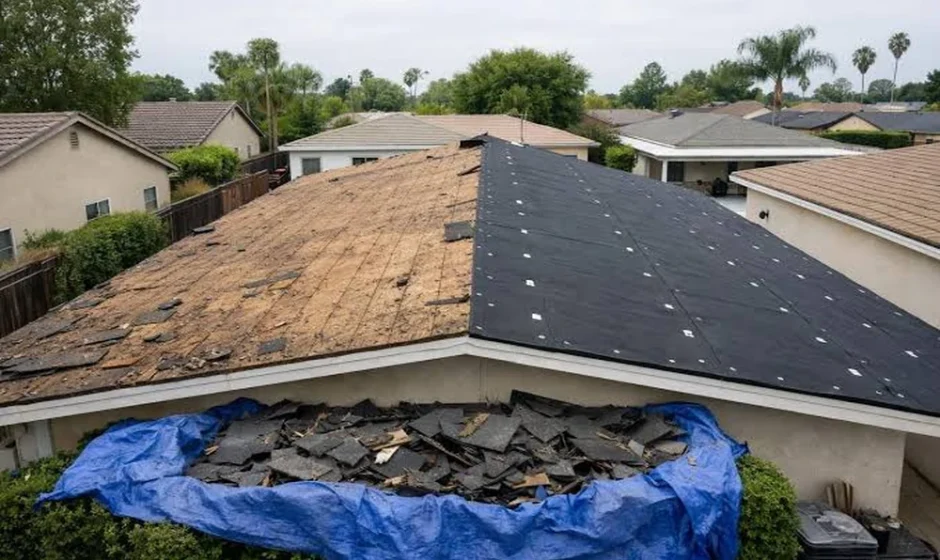
High pressure water strips the protective granules from asphalt shingles, and those granules are what shield the asphalt from ultraviolet light. Once they are gone, the shingles age much faster. The spray can also drive water up under the shingle edges and into the deck. A roof that looked dirty but sound before washing can start leaking soon after.
Walking on the roof is the second risk. Algae and moss make shingles slick, especially in the morning, and most fall injuries during roof cleaning happen on surfaces that looked perfectly safe from the ladder.
Gentle methods work better. Low pressure soft washing with a cleaner made for roofing breaks down algae without scouring the surface. Moss usually needs to be killed first and then brushed off gently once it loosens. Lichen often needs several treatments over months rather than a single aggressive session. Ask anyone you hire which product they use, how they protect the plants around the house from runoff, and whether the method fits the warranty terms of your shingles.
Keeping the Growth From Coming Back
Removing growth without changing the conditions that fed it only buys a year or two. The longer lasting fixes are mostly about sunlight, drainage and chemistry.
Trimming branches back from the roofline lets the sun dry the surface faster and cuts down on debris. Clearing gutters and valleys keeps water moving instead of sitting along the eaves. Strips of zinc or copper installed near the ridge release small amounts of metal ions every time it rains, and those ions discourage growth on the slope below. Homeowners can sometimes see this effect already on their own roofs, where clean bands run beneath metal flashing or chimney caps while the surrounding shingles are streaked.
The biggest long term choice comes at replacement time. Many shingle lines now come in algae resistant versions with copper coated granules mixed into the surface. In a humid climate, the small premium often pays for itself in years of cleaner looks and fewer cleaning bills.
When the Streaks Point to Something Bigger
Growth on a roof is also a clue worth reading. Heavy moss along one section can mean poor drainage, a clogged valley or damp attic air seeping out through the deck. Granules collecting in the gutters, curled tabs under moss patches, or soft spots near the eaves mean the problem has moved beyond appearance.
A roof that is otherwise sound can usually be cleaned and protected for many more years. A roof that is near the end of its life may not be worth treating, and in that case the better money goes toward a replacement that can resist growth from day one. Either way, a close look at what is growing up there tells you a lot about the condition of everything underneath.