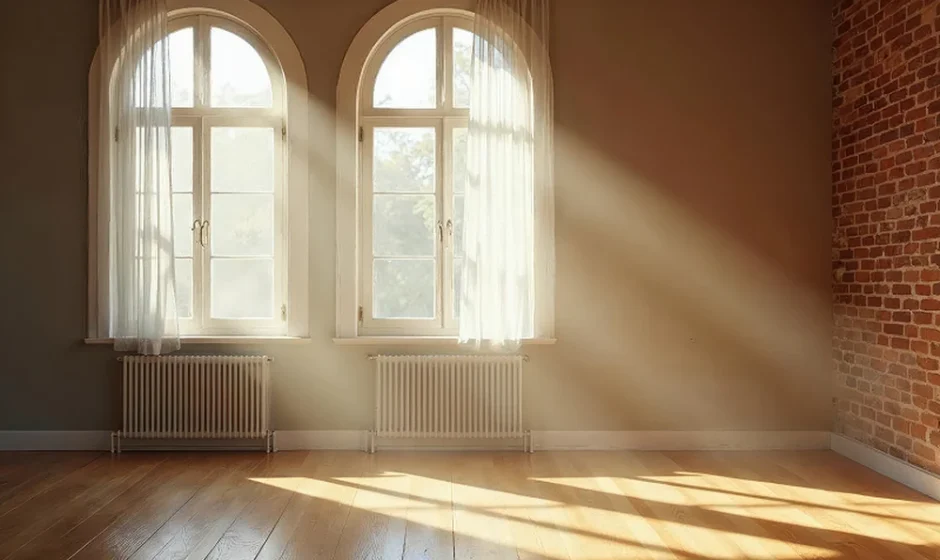

Heating an empty room to around 30 to 35 degrees Celsius can cut its formaldehyde reading by roughly two-thirds in a single session. That’s not a typo. More heat, not less, is what pushes the gas out faster, which runs exactly opposite to how most people instinctively handle a freshly renovated room: windows shut, air conditioning on, trying to keep things cool and undisturbed until the smell fades on its own.
Why Heat Pushes the Gas Out Faster Instead of Trapping It
Laboratory research on building materials has found that both higher temperature and higher humidity measurably increase how much formaldehyde a material releases at any given moment. Warming the air doesn’t create more formaldehyde. It simply speeds up how quickly what’s already trapped inside pressed-wood adhesives and finishes makes its way into the air, which is exactly the logic behind a deliberate formaldehyde removal effort in Singapore rather than just waiting it out at room temperature.
The DIY “Cookout” Method, Step by Step
1. Seal the room. Close every window and door and switch off any ventilation so heat can build up rather than escape.
2. Heat it. Raise the room to roughly 30 to 35 degrees Celsius using the air conditioner’s heat mode, a portable heater, or sustained direct sunlight.
3. Leave. Formaldehyde levels climb while the room heats, so step out and keep the door shut behind you.
4. Let it sit. Eight or more hours is the usual recommendation, often run overnight.
5. Release and repeat. Turn off the heat, open everything up, and let the air clear fully before running the whole cycle again at least two more times.
Where the DIY Version Falls Short of a Proper Formaldehyde Removal Company
A single cookout cycle rarely clears a room to a safe reading, which is why guides recommend running it at least three times before trusting the result. None of those cycles come with an actual measurement, so there’s no way to know whether the room has genuinely dropped below Singapore’s indoor air threshold or simply smells less. A proper formaldehyde removal company pairs the same heat-driven principle with sealing or coating treatments on the materials still emitting the gas and a verified before-and-after reading, rather than leaving the outcome to guesswork and an open window.
Why Singapore’s Climate Is Already Running a Milder Version of This
A shuttered, non-air-conditioned room sitting in Singapore’s heat is, in effect, doing an uncontrolled version of the same thing, which is part of why a newly renovated unit left closed for a weekend can smell stronger when it’s finally opened up. Running the air conditioner constantly does the opposite. Cooler, drier air slows the release, but with the windows sealed for comfort, whatever does escape has nowhere to go and simply builds up indoors instead.
That’s the trade-off a lot of households make without realising it. Keeping a newly furnished room cold and shut for comfort during the first few weeks can actually extend how long the smell lingers, compared with letting the same room run warmer with the door open for short, supervised stretches. It’s a small, genuinely counterintuitive adjustment, but it works with the underlying chemistry rather than against it.
A Few Things to Get Right Before Trying It at Home
- Never stay in the room while it’s heating. Formaldehyde concentrations are highest during that window, not after.
- Keep pets, plants, and anything heat-sensitive out of the room for the full cycle.
- Ventilate completely between cycles. Walking back in too early defeats the purpose of running it at all.
- Treat it as preparation, not a finished result, especially in a room going straight to a nursery or a bedroom.
Heat can help move things along, but confirming the room is actually safe still takes a real measurement. Contact Doctor Clean to have it tested properly before deciding it’s done.